Published - 56 Minutes Ago
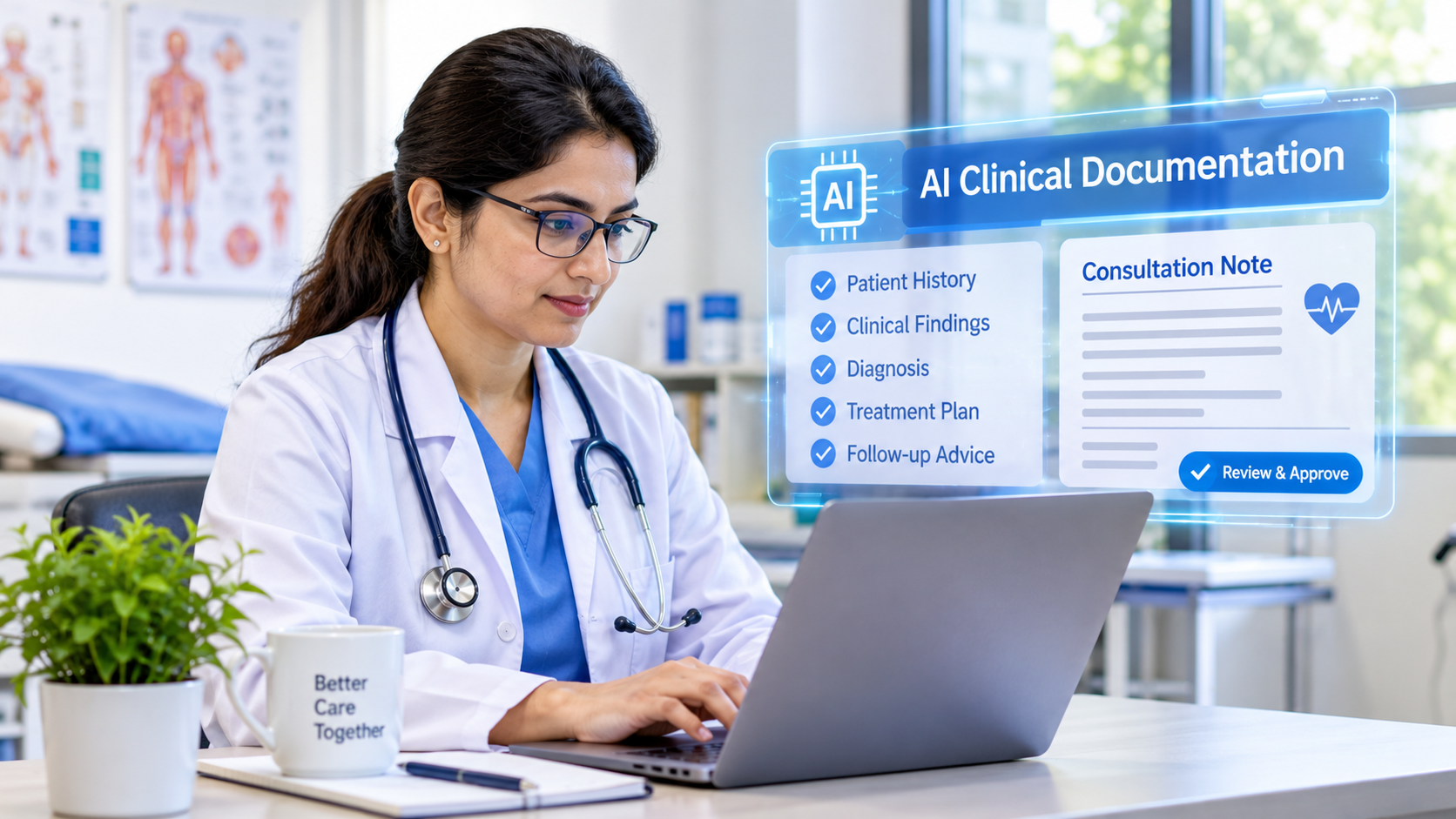
AI in Clinical Documentation: How Doctors Can Save Time While Maintaining Accuracy
Clinical documentation is an essential part of healthcare, but preparing patient records, consultation notes, discharge summaries, and referral letters can take significant time.
Artificial Intelligence (AI) is helping healthcare professionals simplify these tasks. AI-powered tools can convert consultation conversations into structured notes, summarize patient information, and assist with medical record management.
When used responsibly, these tools can reduce administrative work and allow doctors to focus more on patient care.
What Is AI-Powered Clinical Documentation?
AI-powered clinical documentation uses technologies such as speech recognition, Natural Language Processing (NLP), and generative AI to create and organize medical records.
These tools can help doctors:
Prepare patient consultation notes.
Summarize medical histories.
Draft discharge summaries.
Prepare referral letters.
Organize examination findings and treatment plans.
Create follow-up documentation.
AI supports the documentation process but does not replace a doctor's clinical judgment.
How Does AI Clinical Documentation Work?
AI documentation tools generally follow three steps:
1. Capturing Information: The software processes approved consultation conversations or information entered by healthcare professionals.
2. Organizing Medical Details: AI identifies relevant information, such as symptoms, medical history, medications, and examination findings.
3. Creating Clinical Notes: The system prepares a structured draft that the doctor can review, correct, and approve.
The final medical record must always be checked by an authorized healthcare professional.
Key Benefits of AI in Clinical Documentation
1. Saves Time
AI can reduce repetitive typing and assist with preparing clinical notes, helping doctors manage documentation more efficiently.
2. Improves Documentation Organization
AI can arrange medical information into structured sections, making patient records easier to read and review.
3. Supports Patient Interaction
By reducing manual documentation during consultations, AI may help doctors give more attention to conversations with patients.
4. Simplifies Record Management
AI can assist with summarizing lengthy patient histories and preparing drafts of medical documents.
Research published in the Journal of the American Medical Informatics Association and JAMA Network Open has examined the use of AI-powered documentation tools in clinical settings.
Common Uses in Healthcare
AI-powered documentation can support different clinical workflows:
OPD Notes: Prepare structured notes from patient consultations.
Discharge Summaries: Organize hospital treatment details and follow-up instructions.
Referral Letters: Create drafts containing relevant patient information.
EHR Management: Help organize information in electronic health records.
Follow-Up Records: Summarize patient progress and future care plans.
Practical Examples
Example 1: General Physician Clinic
A doctor uses an AI documentation tool to prepare a consultation note based on an approved patient conversation. The doctor reviews the draft and corrects any missing details before saving it.
Example 2: Hospital Discharge
AI helps organize patient information into a discharge summary, including treatment details, medications, and follow-up instructions. The treating doctor verifies the final document.
Example 3: Specialist Consultation
A specialist uses AI to summarize relevant information from a patient's medical history, making it easier to review previous consultations and records.
These examples illustrate potential uses rather than guaranteed results.
Challenges and Limitations
Despite its benefits, AI documentation has important limitations.
Accuracy: AI may misunderstand medical terminology or generate incorrect information.
Patient Privacy: Healthcare organizations must protect sensitive patient information.
System Integration: Some tools may require integration with existing electronic health record systems.
Professional Oversight: Doctors must review and approve AI-generated records.
Implementation Costs: Software, training, and maintenance may involve additional expenses.
Healthcare organizations should choose secure, approved solutions and follow applicable privacy and data protection requirements.
Best Practices for Using AI
To use AI responsibly in clinical documentation, healthcare professionals should:
Review every AI-generated note before approval.
Follow appropriate patient consent and privacy requirements.
Use secure and trusted software platforms.
Train staff to understand the technology and its limitations.
Regularly monitor documentation quality and accuracy.
The Future of AI in Clinical Documentation
AI technology is expected to become increasingly integrated into electronic health records and everyday clinical workflows.
Future systems may offer better medical language recognition, multilingual documentation, and more efficient patient record summaries.
However, successful adoption will depend on accuracy, data security, transparency, and human oversight.
The World Health Organization also emphasizes responsible governance and ethical use of AI in healthcare.
Read WHO guidance on AI in healthcare
Conclusion
AI in clinical documentation offers doctors and healthcare organizations an opportunity to simplify administrative tasks, organize medical records, and improve workflow efficiency.
From consultation notes to discharge summaries, AI can assist with preparing structured medical documents. However, patient privacy, clinical accuracy, and professional review must always remain priorities.
AI should be treated as a supportive tool, not a replacement for medical expertise. With responsible implementation, it can help healthcare professionals spend less time on repetitive documentation and more time focusing on quality patient care.
SEO Details
SEO Title: AI in Clinical Documentation: Benefits and Uses for Doctors
Meta Description: Discover how AI in clinical documentation helps doctors save time, organize medical records, improve workflow efficiency, and maintain accuracy.
URL Slug: ai-in-clinical-documentation
Primary Keyword: AI in Clinical Documentation
Secondary Keywords: AI Medical Documentation, AI Tools for Doctors, Automated Clinical Documentation, AI in Healthcare, Medical Scribing Technology, AI Clinical Notes, Electronic Health Records
Category: Healthcare Technology
References
Created by

Rigomo Team
Rigomo is a leading online education platform that offers a wide range of courses to help individuals enhance their skills and achieve their career goals. With our user-friendly interface and expert instructors, we strive to provide high-quality education to everyone, anytime and anywhere. Join us today and take the first step towards a brighter future.
Rigomo is an e-learning platform that was founded in 2019 by a team of dedicated professionals with a passion for revolutionizing the way people learn. The platform offers a range of online courses that cover various industries, including business, technology, healthcare, and more.
Rigomo's courses are designed to be interactive and engaging, with a focus on practical skills that learners can apply in their careers. The platform uses a combination of video lectures, quizzes, and hands-on projects to help learners master the subject matter.
Rigomo is committed to providing affordable and accessible education to people around the world. The platform offers a range of pricing options, including monthly and annual subscriptions, as well as pay-as-you-go options for individual courses.
Since its launch, Rigomo has received numerous accolades for its innovative approach to e-learning. The platform has helped thousands of learners across the globe acquire new skills and advance their careers.
As Rigomo continues to grow, the team remains committed to providing high-quality education that is accessible to all. The platform is constantly updating its courses and features to ensure that learners have access to the latest tools and technologies.
Comments (0)
Search
Popular categories
Health and Wellness
233Skill Development
9Technology
5Community Impact
2Success story
2Creativity
1Latest blogs
AI in Clinical Documentation: How Doctors Can Save Time While Maintaining Accuracy
56 Minutes Ago

Financial Planning for Doctors: Clinic Management and Growth
4 Days Ago

Beyond Blood Sugar: How Continuous Glucose Monitoring Is Transforming Diabetes Management
5 Days Ago
Write a public review