Created by - Rigomo Team
AI in Clinical Documentation: How Doctors Can Save Time While Maintaining Accuracy
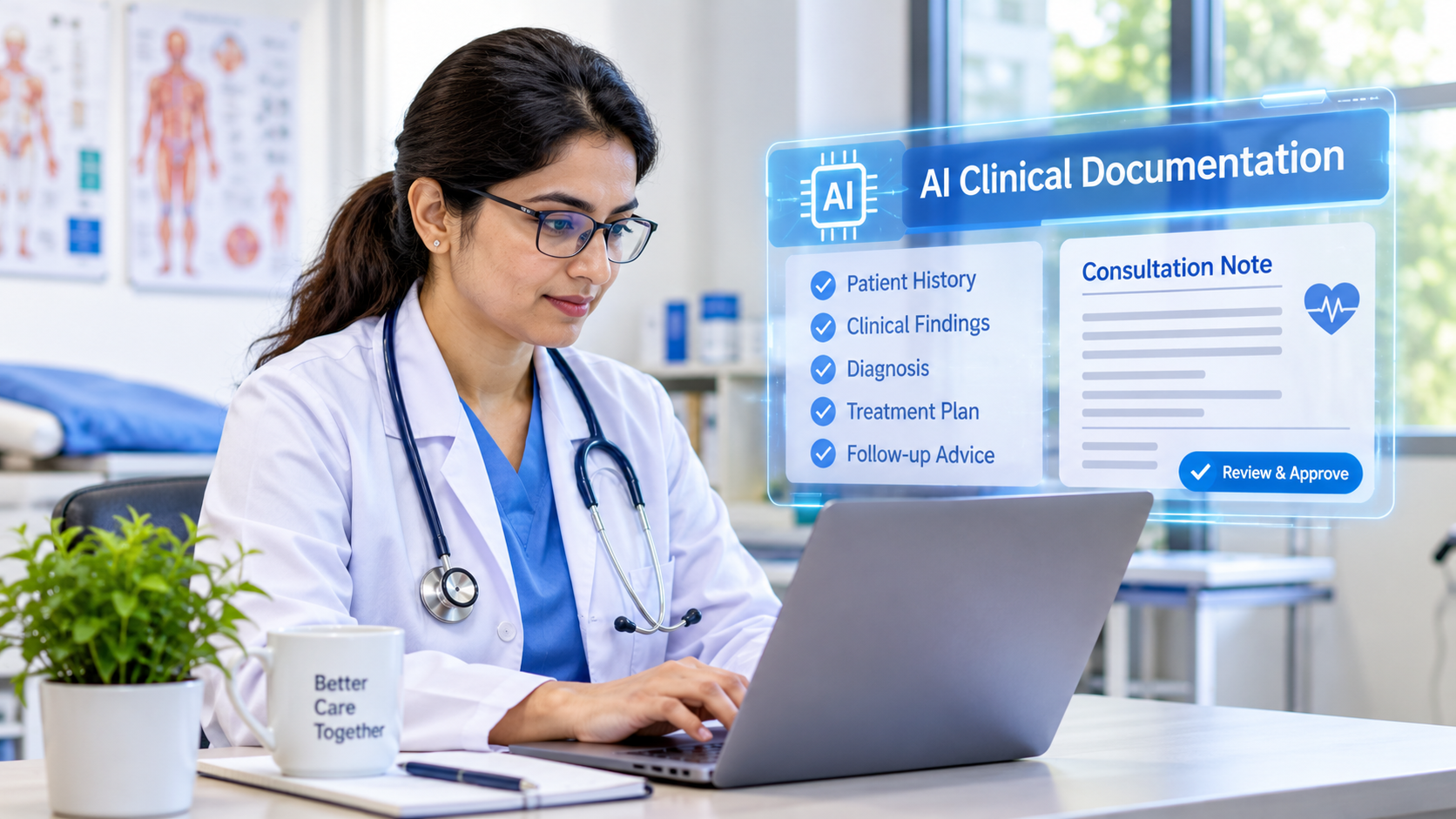
Clinical documentation is an essential part of healthcare, but preparing patient records, consultation notes, discharge summaries, and referral letters can take significant time.Artificial Intelligence (AI) is helping healthcare professionals simplify these tasks. AI-powered tools can convert consultation conversations into structured notes, summarize patient information, and assist with medical record management.When used responsibly, these tools can reduce administrative work and allow doctors to focus more on patient care.What Is AI-Powered Clinical Documentation?AI-powered clinical documentation uses technologies such as speech recognition, Natural Language Processing (NLP), and generative AI to create and organize medical records.These tools can help doctors:Prepare patient consultation notes.Summarize medical histories.Draft discharge summaries.Prepare referral letters.Organize examination findings and treatment plans.Create follow-up documentation.AI supports the documentation process but does not replace a doctor's clinical judgment.How Does AI Clinical Documentation Work?AI documentation tools generally follow three steps:1. Capturing Information: The software processes approved consultation conversations or information entered by healthcare professionals.2. Organizing Medical Details: AI identifies relevant information, such as symptoms, medical history, medications, and examination findings.3. Creating Clinical Notes: The system prepares a structured draft that the doctor can review, correct, and approve.The final medical record must always be checked by an authorized healthcare professional.Key Benefits of AI in Clinical Documentation1. Saves TimeAI can reduce repetitive typing and assist with preparing clinical notes, helping doctors manage documentation more efficiently.2. Improves Documentation OrganizationAI can arrange medical information into structured sections, making patient records easier to read and review.3. Supports Patient InteractionBy reducing manual documentation during consultations, AI may help doctors give more attention to conversations with patients.4. Simplifies Record ManagementAI can assist with summarizing lengthy patient histories and preparing drafts of medical documents.Research published in the Journal of the American Medical Informatics Association and JAMA Network Open has examined the use of AI-powered documentation tools in clinical settings.Read research on ambient AI scribesRead the JAMA Network Open studyCommon Uses in HealthcareAI-powered documentation can support different clinical workflows:OPD Notes: Prepare structured notes from patient consultations.Discharge Summaries: Organize hospital treatment details and follow-up instructions.Referral Letters: Create drafts containing relevant patient information.EHR Management: Help organize information in electronic health records.Follow-Up Records: Summarize patient progress and future care plans.Practical ExamplesExample 1: General Physician ClinicA doctor uses an AI documentation tool to prepare a consultation note based on an approved patient conversation. The doctor reviews the draft and corrects any missing details before saving it.Example 2: Hospital DischargeAI helps organize patient information into a discharge summary, including treatment details, medications, and follow-up instructions. The treating doctor verifies the final document.Example 3: Specialist ConsultationA specialist uses AI to summarize relevant information from a patient's medical history, making it easier to review previous consultations and records.These examples illustrate potential uses rather than guaranteed results.Challenges and LimitationsDespite its benefits, AI documentation has important limitations.Accuracy: AI may misunderstand medical terminology or generate incorrect information.Patient Privacy: Healthcare organizations must protect sensitive patient information.System Integration: Some tools may require integration with existing electronic health record systems.Professional Oversight: Doctors must review and approve AI-generated records.Implementation Costs: Software, training, and maintenance may involve additional expenses.Healthcare organizations should choose secure, approved solutions and follow applicable privacy and data protection requirements.Best Practices for Using AITo use AI responsibly in clinical documentation, healthcare professionals should:Review every AI-generated note before approval.Follow appropriate patient consent and privacy requirements.Use secure and trusted software platforms.Train staff to understand the technology and its limitations.Regularly monitor documentation quality and accuracy.The Future of AI in Clinical DocumentationAI technology is expected to become increasingly integrated into electronic health records and everyday clinical workflows.Future systems may offer better medical language recognition, multilingual documentation, and more efficient patient record summaries.However, successful adoption will depend on accuracy, data security, transparency, and human oversight.The World Health Organization also emphasizes responsible governance and ethical use of AI in healthcare.Read WHO guidance on AI in healthcareConclusionAI in clinical documentation offers doctors and healthcare organizations an opportunity to simplify administrative tasks, organize medical records, and improve workflow efficiency.From consultation notes to discharge summaries, AI can assist with preparing structured medical documents. However, patient privacy, clinical accuracy, and professional review must always remain priorities.AI should be treated as a supportive tool, not a replacement for medical expertise. With responsible implementation, it can help healthcare professionals spend less time on repetitive documentation and more time focusing on quality patient care.SEO DetailsSEO Title: AI in Clinical Documentation: Benefits and Uses for DoctorsMeta Description: Discover how AI in clinical documentation helps doctors save time, organize medical records, improve workflow efficiency, and maintain accuracy.URL Slug: ai-in-clinical-documentationPrimary Keyword: AI in Clinical DocumentationSecondary Keywords: AI Medical Documentation, AI Tools for Doctors, Automated Clinical Documentation, AI in Healthcare, Medical Scribing Technology, AI Clinical Notes, Electronic Health RecordsCategory: Healthcare TechnologyReferencesJournal of the American Medical Informatics Association – Ambient AI ScribesJAMA Network Open – AI Documentation ResearchWorld Health Organization – Ethics and Governance of AI for Health
More detailsPublished - 1 Day Ago

Created by - Rigomo Team
Digital Health Records in India: Benefits, Challenges, and What Doctors Should Know
Healthcare is becoming increasingly digital, and electronic health records are playing an important role in transforming how patient information is managed.Traditionally, hospitals and clinics have relied on paper files to maintain medical histories, prescriptions, laboratory reports, and treatment records. However, managing physical documents can be time-consuming and make it difficult to access a patient's complete medical history.Digital health records offer a more organized approach. They help healthcare professionals store, access, and manage patient information electronically, supporting better coordination and continuity of care.In India, the Ayushman Bharat Digital Mission (ABDM) is an important initiative supporting the development of a connected digital healthcare ecosystem.What Are Digital Health Records?Digital health records are electronic versions of a patient's medical information. They may include:Medical history and previous diagnoses.Doctor consultation notes.Prescriptions and medication details.Laboratory and diagnostic reports.Hospital admission and discharge summaries.Treatment and follow-up information.These records help authorized healthcare professionals review relevant patient information and maintain organized medical documentation.Understanding ABHA and ABDMIndia's Ayushman Bharat Digital Mission aims to make healthcare information more accessible and interoperable.Two important terms are:ABHA (Ayushman Bharat Health Account): A digital health identity that helps individuals link and access their health records across participating healthcare providers.ABDM (Ayushman Bharat Digital Mission): A national initiative that supports the development of digital health infrastructure and enables secure, consent-based exchange of health information.An important distinction is that ABHA is an identity, not a central storage location for every medical record. Health records generally remain with the healthcare providers that create them, while ABDM facilitates their exchange with appropriate consent.Read more about ABDM – National Health AuthorityBenefits of Digital Health Records for Doctors and Patients1. Easier Access to Patient InformationDigital records can help authorized doctors review previous prescriptions, diagnostic reports, and medical histories without relying entirely on physical files.This can be particularly useful when patients visit multiple healthcare facilities.2. Better Continuity of CareWhen relevant records are available across participating healthcare providers, doctors can gain a better understanding of a patient's previous treatment and medical history.This can support more coordinated care, especially for patients managing long-term health conditions.3. Reduced PaperworkDigital documentation can reduce dependence on physical files and help clinics organize prescriptions, consultation notes, and reports more efficiently.4. Improved Healthcare CoordinationDigital health information can support communication between doctors, diagnostic laboratories, hospitals, and other authorized healthcare professionals.5. Greater Patient ConveniencePatients can benefit from easier access to their health information and may not need to carry multiple physical reports whenever they visit a participating healthcare facility.How Digital Health Records Are Transforming Healthcare in IndiaIndia's digital healthcare ecosystem has expanded through initiatives such as ABDM.According to a Ministry of Health and Family Welfare announcement dated May 22, 2026, more than 100 crore health records had been linked with ABHA under the mission.This demonstrates the growing adoption of digital health infrastructure across India.The initiative aims to support more connected healthcare services, improve access to medical information, and make health information exchange more convenient.Source: Press Information Bureau – 100 Crore Health Records Linked with ABHAPractical Examples of Digital Health RecordsExample 1: A Multi-Specialty ClinicA patient visits a general physician and later consults a specialist. With appropriate consent and compatible digital systems, relevant previous consultation records and reports can be shared with the specialist.This can help reduce repeated information collection.Example 2: Diagnostic LaboratoryA patient completes a blood test at a participating laboratory. The digital report can be made available through an appropriate connected health record system, allowing the patient to access and share it with an authorized doctor.Example 3: Hospital Follow-UpAfter discharge, a patient needs follow-up consultations. A digital discharge summary can help the treating doctor review previous treatment, medications, and follow-up recommendations.These examples illustrate potential workflows; actual availability depends on system integration and patient consent.Challenges of Digital Health RecordsDespite their benefits, digital health records also introduce challenges that healthcare organizations must address.1. Data Privacy and SecurityMedical records contain sensitive personal information. Healthcare providers must use secure systems, restrict access to authorized users, and follow applicable data protection requirements.2. Digital LiteracySome patients and healthcare professionals may need assistance understanding and using digital health platforms.Training and user-friendly systems are important for wider adoption.3. Technology and InfrastructureSmaller clinics and healthcare facilities may face challenges involving internet connectivity, software costs, equipment, and technical support.4. InteroperabilityDifferent hospitals and clinics may use different software systems. Digital health platforms need compatible standards to exchange information effectively.5. Data AccuracyIncorrect or incomplete medical information can create confusion. Healthcare professionals must ensure that records are properly updated and verified.What Doctors Should Consider Before Adopting Digital Health RecordsDoctors and clinic owners can take a few practical steps when moving towards digital documentation:Choose reliable software: Select a suitable electronic health record system that meets the clinic's requirements.Check ABDM compatibility: Evaluate whether the software supports relevant ABDM standards and integrations.Protect patient information: Use appropriate security controls and access permissions.Train clinic staff: Ensure that doctors, nurses, and administrative teams understand the system.Maintain accurate records: Review patient information regularly and correct errors when identified.Respect patient consent: Follow appropriate consent procedures before sharing health information.ConclusionDigital health records are becoming an important part of India's changing healthcare landscape. They can help doctors organize patient information, reduce paperwork, improve healthcare coordination, and support continuity of care.Initiatives such as the Ayushman Bharat Digital Mission are creating opportunities for a more connected digital healthcare ecosystem.However, successful adoption requires secure technology, accurate records, staff training, interoperability, and patient consent.For doctors and clinic owners, understanding digital health records is an important step towards modernizing medical practice and delivering more coordinated patient care.SEO DetailsSEO Title: Digital Health Records in India: Benefits and Challenges for DoctorsMeta Description: Learn how digital health records are transforming healthcare in India, including ABHA, ABDM, benefits for doctors, data privacy, and implementation challenges.URL Slug: digital-health-records-indiaPrimary Keyword: Digital Health Records in IndiaSecondary Keywords: Electronic Health Records, ABHA Health ID, Ayushman Bharat Digital Mission, Digital Healthcare in India, EHR for Doctors, Healthcare Technology, Patient Medical Records, Digital Health ManagementCategory: Healthcare TechnologyReferencesNational Health Authority – Ayushman Bharat Digital MissionPress Information Bureau – 100 Crore Health Records Linked with ABHAGovernment of India – Cybersecurity Under ABDMGovernment of India – Electronic Health Record Standards
More detailsPublished - 3 Hours Ago
Search
Popular categories
Health and Wellness
233Skill Development
9Technology
6Community Impact
2Success story
2Creativity
1Latest blogs

Digital Health Records in India: Benefits, Challenges, and What Doctors Should Know
3 Hours Ago
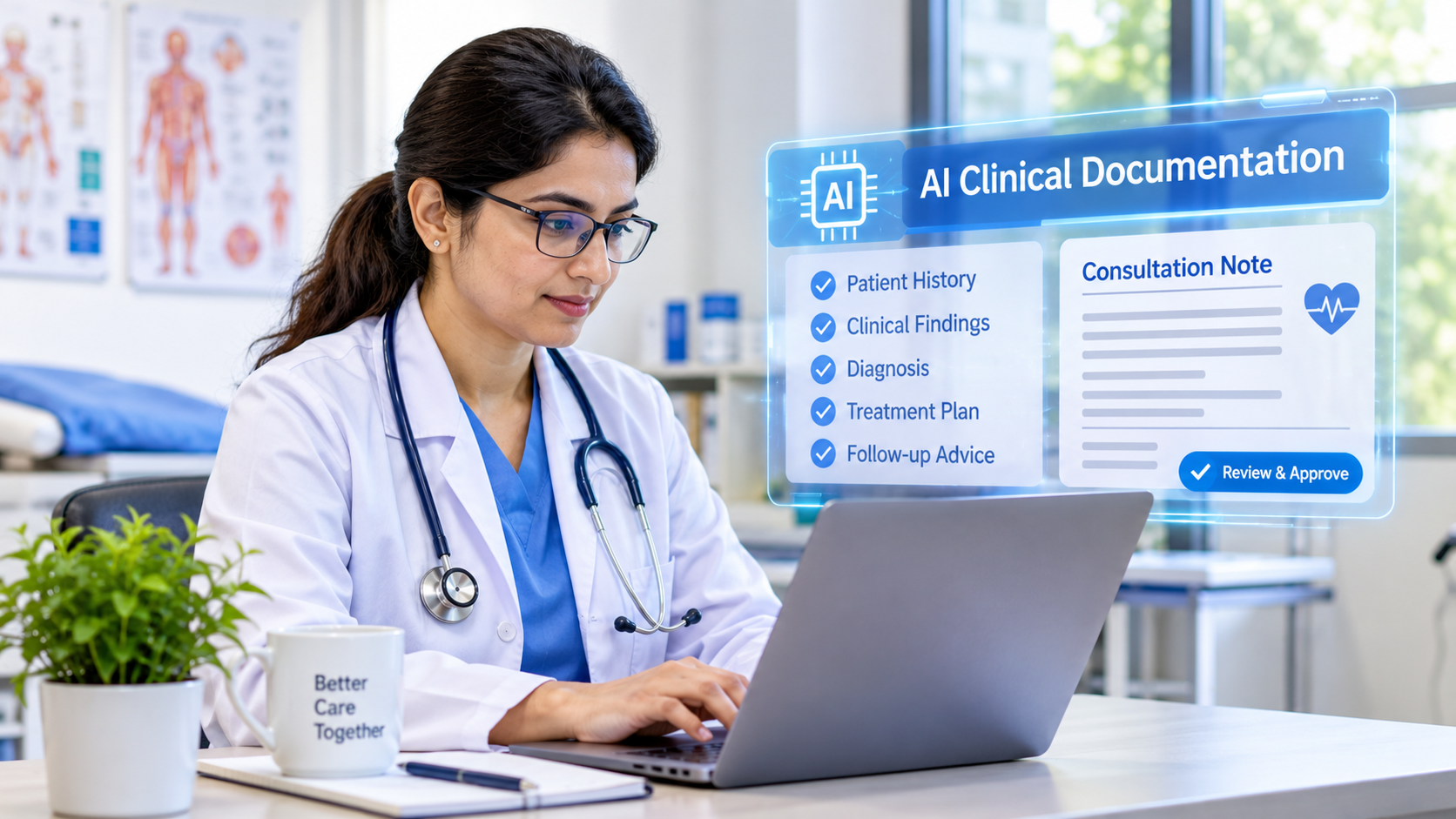
AI in Clinical Documentation: How Doctors Can Save Time While Maintaining Accuracy
1 Day Ago

Financial Planning for Doctors: Clinic Management and Growth
5 Days Ago
Write a public review