Published - Thu, 27 Aug 2026
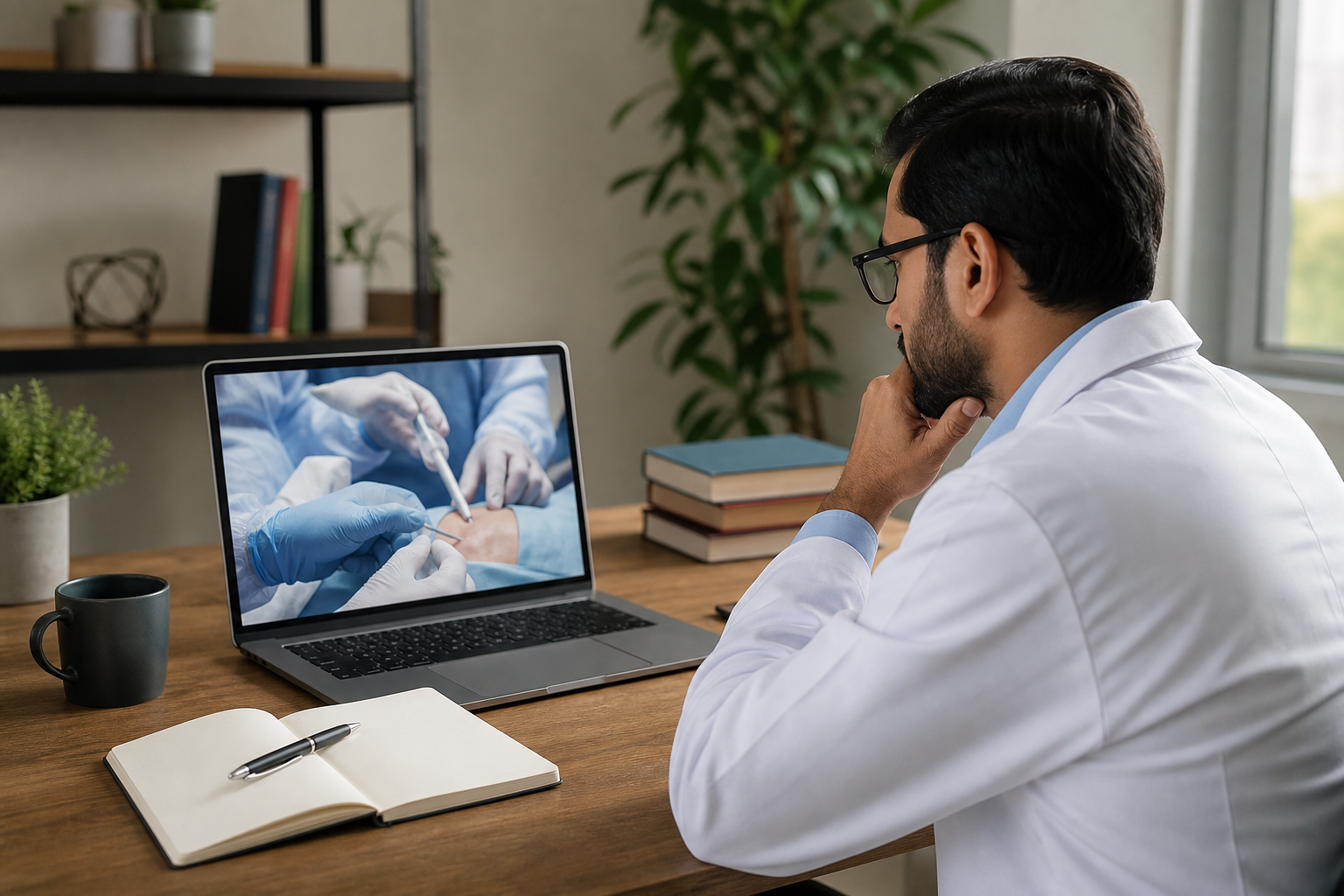
Online Clinical Courses for Doctors to Build Practical Skills
Doctors and healthcare professionals need to keep developing their clinical knowledge, but finding time for education alongside patient care can be difficult. Online clinical courses for doctors offer a flexible way to study relevant topics, revisit difficult concepts, and apply learning to everyday practice.
The most useful courses do more than present information. They connect clinical skills with real decisions, help learners understand how technology can support care, and address the practical side of developing a sustainable medical practice. The right course should fit your goals, your current level of experience, and the way you want to use what you learn.
Rigomo provides practical online courses for doctors and healthcare professionals in three connected areas: clinical skills, AI and digital practice, and practice growth. This combination allows professionals to focus on better patient care while also building capabilities that support long-term professional development.
What Are Online Clinical Courses for Doctors?
Online clinical courses for doctors are structured learning programmes delivered through digital platforms. They are designed to help medical professionals strengthen clinical knowledge, improve practical decision-making, or develop skills that can be used in patient care.
Unlike broad medical content, a focused online course is built around a defined learning objective. For example, a course might help a doctor review a clinical approach, understand a new digital workflow, or think more clearly about how technology can be used in practice. The value comes from linking the subject to professional action rather than learning facts in isolation.
Online learning may be particularly useful for professionals who need flexibility. You can compare course topics, choose education that reflects your current needs, and study when it is realistic to do so. However, convenience should not be the only selection criterion. A course is more valuable when its subject matter is relevant, its explanations are practical, and its learning can be carried into your professional setting.
Why Practical Online Medical Education Matters
Professional development has a direct connection to the quality and consistency of clinical work. Learning can help doctors review established approaches, explore useful tools, and identify ways to improve the experience of delivering care. It can also encourage more deliberate reflection on how clinical and operational decisions affect patients.
Practical education is different from simply collecting information. It asks questions such as:
- How does this knowledge influence a clinical decision?
- What would applying this approach look like in day-to-day work?
- Which parts of the learning are immediately relevant, and which require further study?
- How can digital tools support care without replacing professional judgement?
These questions make online medical education more useful because they move the learner from passive consumption towards thoughtful application. A doctor may finish a lesson with a clearer framework for approaching a clinical issue, a better understanding of a digital option, or a more structured plan for improving practice.
Education should always be considered alongside professional standards, current guidance, local requirements, and the needs of individual patients. An online course can support development, but it does not replace clinical judgement, appropriate supervision, or the responsibility to use reliable information in context.
Three Areas to Consider When Choosing a Course
Clinical skills
Clinical skills courses can help doctors revisit the knowledge and approaches that underpin patient care. When comparing a course, look for a clear explanation of what skill or area it addresses and how the material relates to clinical work.
A useful clinical course should encourage you to think through the reasoning behind an approach, not only memorise a list of facts. Consider whether the course helps you recognise relevant information, structure your thinking, and identify questions that may need further investigation.
Clinical learning is often most valuable when it reflects the realities of practice. Look for material that acknowledges uncertainty, variation between patients, and the importance of adapting decisions to the situation in front of you.
AI and digital practice
Artificial intelligence and digital tools are becoming increasingly relevant to healthcare professionals. Doctors may need to understand what these tools are intended to do, where they may be useful, and what professional considerations should guide their use.
Courses in AI and digital practice can support a more informed approach to technology. Instead of treating digital tools as automatically beneficial, learners can evaluate how a tool fits into care, communication, documentation, or other parts of professional work. They can also consider where human oversight remains essential.
When assessing a digital practice course, ask whether it explains the practical implications of adoption. A strong learning experience should help you think about workflow, responsible use, limitations, and the effect on patients and healthcare professionals—not just the technical vocabulary.
Practice growth
Clinical quality and practice development are closely related. Doctors and healthcare professionals may also need skills that help them organise their work, communicate value clearly, and create a more sustainable professional environment.
Practice growth education can address the thinking behind development rather than promising a one-size-fits-all result. The right course should help you connect professional goals with the needs of the people you serve. It may also encourage a clearer view of how patient care, service design, communication, and operational decisions work together.
For a busy professional, studying these three areas together can provide a broader perspective. Clinical skills support care directly, digital knowledge helps you assess new possibilities, and practice growth can help create the conditions for continued improvement.
How to Choose the Right Online Clinical Course
Before enrolling in an online clinical course for doctors, define what you want the learning to achieve. A specific objective makes it easier to judge whether a course is suitable and whether the time required is worthwhile.
- Identify the gap. Decide whether you need to strengthen a clinical skill, understand AI and digital practice, or address a practice-development priority.
- Check the level. Consider whether the course is appropriate for your current knowledge and professional responsibilities. Material that is too basic may not be useful, while material that assumes advanced knowledge may be difficult to apply.
- Review the practical focus. Look for clear learning outcomes and an explanation of how the subject relates to real professional decisions or workflows.
- Consider flexibility. Think about when and how you will study. A course should fit realistically around patient care and other responsibilities.
- Plan for application. Decide in advance how you will use the learning. This might involve reviewing a process, discussing an idea with colleagues, or identifying a question for further professional study.
It is also sensible to consider how the course fits into your broader development. One short course may answer an immediate need, while a sequence of learning across related topics may better support a longer-term goal. The best choice depends on what you are trying to improve now.
Making Online Learning Fit Around Clinical Work
Online education is flexible, but flexibility does not automatically create time. A simple plan can make it easier to study consistently without allowing education to become another source of pressure.
Start by setting a clear purpose for the course. Write down the professional question you want it to help answer. Then divide the learning into manageable sessions that fit your schedule. Short, focused study periods can be more realistic than waiting for a large block of uninterrupted time.
Keep notes focused on application. Rather than recording every detail, capture the ideas that change how you understand a problem or suggest a useful next step. You can organise notes under three headings: what I learned, what I need to verify, and how this may affect my practice.
After completing a section, pause before moving on. Ask what you would do differently, what remains unclear, and whether the material raises any patient-safety or professional questions. This reflection helps turn online learning into an active part of development.
Where appropriate, discuss relevant learning with colleagues. Professional conversation can reveal different perspectives and help you separate a useful general principle from an idea that needs careful adaptation to a particular setting. Any change to clinical practice should be considered responsibly and in line with applicable requirements and guidance.
Examples of Useful Learning Goals
A course is easier to evaluate when the goal is expressed in practical terms. “Learn more about AI” is broad. “Understand how to assess a digital tool before considering its use in professional work” is more specific and gives you a clearer basis for judging progress.
Other examples of focused goals include:
- Strengthen a clinical approach that is relevant to your current responsibilities.
- Build a clearer framework for thinking through clinical information and decisions.
- Understand how AI may affect medical workflows and where professional judgement remains necessary.
- Identify ways to use digital practice thoughtfully while keeping patient care central.
- Clarify how practice-growth decisions can support professional goals and the needs of patients.
These goals do not assume that a course will solve every challenge. They give your learning a direction and help you decide what further education, discussion, or review may be appropriate.
How Rigomo Supports Professional Development
Rigomo is an online medical education platform for doctors and healthcare professionals. Its practical online courses focus on clinical skills, AI and digital practice, and practice growth, giving learners the opportunity to develop across areas that influence both patient care and professional work.
This broad focus can be useful if you are looking for education that goes beyond a single narrow topic. You can approach learning through the area that matches your immediate priority, whether that is strengthening clinical capability, becoming more informed about technology, or thinking about how to develop your practice.
Rigomo’s emphasis on practical courses also reflects an important principle: professional education should connect with the work healthcare professionals actually do. As you review available learning, consider which topic best matches your current needs and how you will apply the ideas responsibly in your own context.
Turn Learning Into Your Next Professional Step
Online clinical courses for doctors can make professional development more accessible and more focused, especially when the learning is practical and connected to patient care. The strongest choice is not necessarily the broadest course or the most advanced-sounding topic. It is the one that addresses a genuine need, fits your circumstances, and helps you think more clearly about your next step.
Begin by identifying the skill or question you want to develop. Then compare the course focus, practical relevance, level, and flexibility before committing your time. Explore Rigomo’s online medical education courses to find a focused way to support your clinical skills, digital practice, or practice growth.
Created by
Rigomo Team
Rigomo is a leading online education platform that offers a wide range of courses to help individuals enhance their skills and achieve their career goals. With our user-friendly interface and expert instructors, we strive to provide high-quality education to everyone, anytime and anywhere. Join us today and take the first step towards a brighter future.
Rigomo is an e-learning platform that was founded in 2019 by a team of dedicated professionals with a passion for revolutionizing the way people learn. The platform offers a range of online courses that cover various industries, including business, technology, healthcare, and more.
Rigomo's courses are designed to be interactive and engaging, with a focus on practical skills that learners can apply in their careers. The platform uses a combination of video lectures, quizzes, and hands-on projects to help learners master the subject matter.
Rigomo is committed to providing affordable and accessible education to people around the world. The platform offers a range of pricing options, including monthly and annual subscriptions, as well as pay-as-you-go options for individual courses.
Since its launch, Rigomo has received numerous accolades for its innovative approach to e-learning. The platform has helped thousands of learners across the globe acquire new skills and advance their careers.
As Rigomo continues to grow, the team remains committed to providing high-quality education that is accessible to all. The platform is constantly updating its courses and features to ensure that learners have access to the latest tools and technologies.
Comments (0)
Search
Popular categories
Health and Wellness
232Skill Development
7Technology
5Community Impact
2Success story
2Creativity
1Latest blogs
Online Clinical Courses for Doctors to Build Practical Skills
Thu, 27 Aug 2026

DeepSchool: The Story of an Idea That Refused to Sit Still
Tue, 02 Dec 2025
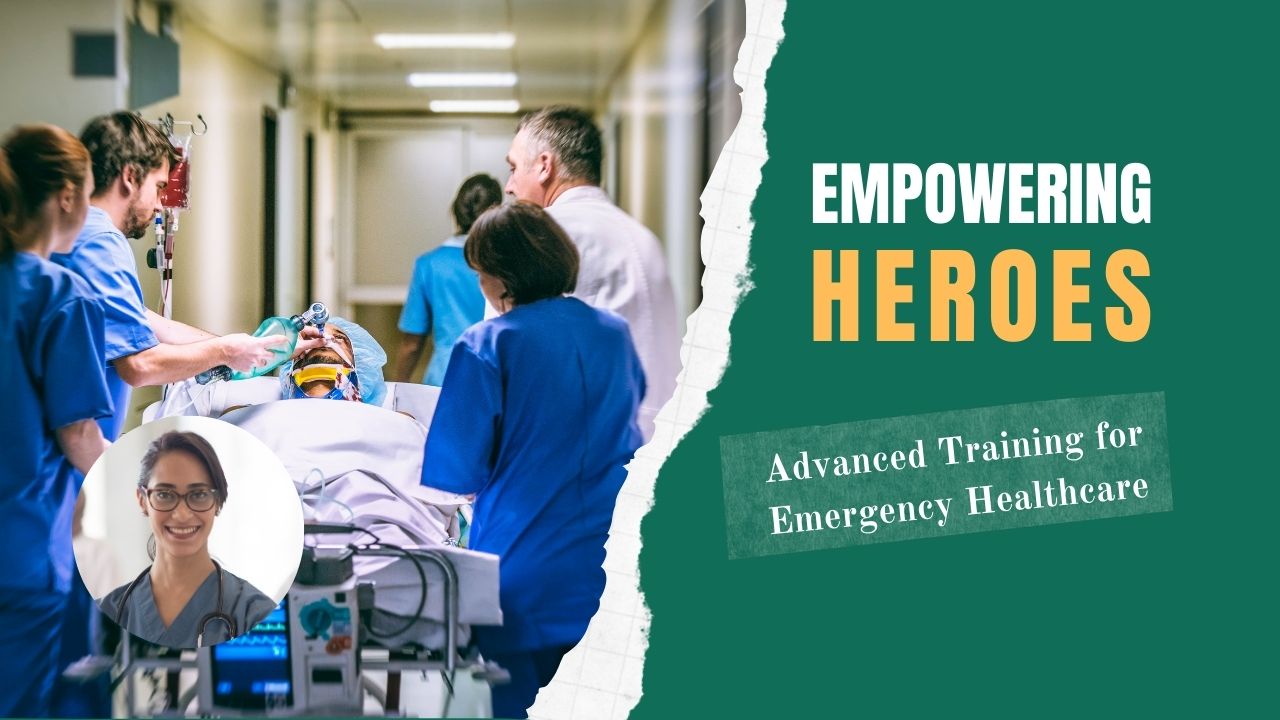
Transforming Emergency Care: The Story Behind Rigomo's Revolutionary PPMMP Course
Sun, 12 May 2024
Write a public review