25 Proven Strategies for Increasing Your Medical Practice's Patient Base | Rigomo

Published - Fri, 19 Jan 2024
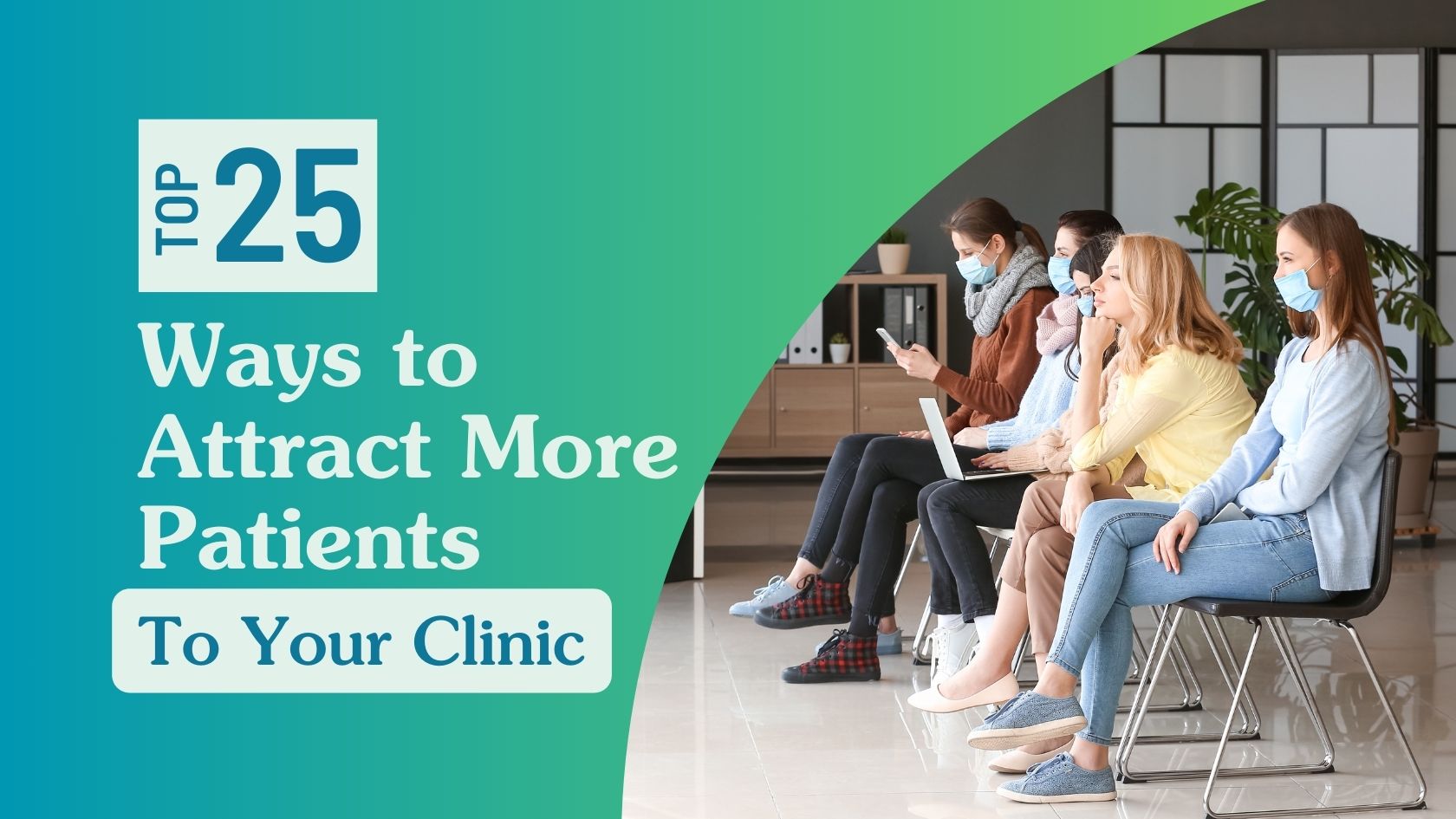
25 Proven Strategies for Increasing Your Medical Practice's Patient Base

25 Proven Strategies for Increasing Your Medical Practice's Patient Base

In today’s rapidly evolving healthcare landscape, simply offering top-notch medical services isn't enough. To truly thrive, a medical practice needs a blend of effective marketing, patient engagement, and a constant influx of new patients, along with the retention of existing ones. Let’s dive into 25 dynamic strategies to help your medical practice flourish by attracting and retaining more patients.

1. Understand Your Audience

Get to know your current patients better. Analyzing their age, gender, profession, and location can guide your marketing efforts more effectively.

2. Staff Training

Your staff are often the first point of contact for patients. Equip them with the skills and knowledge to make a great first impression and provide helpful information.

3. Patient Follow-Ups

Don’t just focus on attracting new patients; retaining existing ones is equally crucial. Regular follow-ups can foster loyalty and encourage referrals.

4. Mobile-Friendly Website

In the digital age, a sleek, responsive website is essential. It should be informative, easy to navigate, and accessible on all devices. For this you can get the help of artificial intelligence to create your website. Here is a link to a specific course designed for doctors and healthcare professionals to learn on how to create a responsive professional website for a clinic, without any technical skills using artificial intelligence. 

5. Blogging

Share your expertise through a blog. Regular posts on health tips, practice updates, and local events can boost your SEO and establish your authority in the field.

6. Contests and Giveaways

Engage your community with contests and giveaways. It’s a fun way to raise awareness about your practice and attract potential patients.

7. Online Reviews

Encourage patients to leave reviews. Positive feedback builds trust and can be a deciding factor for prospective patients.

8. Community Involvement

Participate in local events or host educational seminars. Being active in your community can broaden your patient base.

9. Social Media Savvy

Maintain an active social media presence. Share valuable content that resonates with your audience and encourages shares and likes. Here also you can take the help of AI. Click here to learn how you can leverage the power of artificial intelligence to manage your social profiles.

10. Monitor Online Reputation

Keep an eye on reviews and feedback. Responding to both positive and negative comments shows you value patient input and are committed to improvement.

11. Embrace Technology

Stay updated with technological advancements. Offering online services like test result downloads can enhance patient convenience and satisfaction.

12. Responsive Service

Be prepared to scale up staff and services in response to increased patient numbers. Adaptability is key to meeting patient needs effectively.

13. Quality Service

Patients won’t refer others unless they’re satisfied with your care and demeanor. Show genuine interest and maintain a welcoming clinic environment.

14. Flexible Scheduling

Offer appointment times that are convenient for your patients, not just for your practice.

15. Ask for Referrals

Don’t shy away from asking satisfied patients for referrals. It’s a simple yet effective way to attract new patients.

16. Networking with Peers

Build relationships with other healthcare providers. Mutual referrals can be beneficial for all parties involved.

17. Email Reminders

Use emails to remind patients of upcoming appointments and checkups, keeping your practice in their minds.

18. Email Marketing

Stay in touch with patients through emails. Share updates, health tips, and promotional offers to keep them engaged.

19. Local SEO

Optimize your online presence for local searches. Most patients look for nearby healthcare providers, so appearing in local search results is crucial.

20. Local Online Directories

List your practice in local online directories. This can significantly increase your visibility to potential patients in your area. We have designed a dedicated course for doctors and medical professionals to learn to how to create, manage and take use of the local directories like, Google My Business, Just Dial etc.

21. Media Exposure

Seek opportunities for media exposure to enhance your practice's visibility and credibility.

22. Real Images

Use real photos of your staff and clinic on your website and social media. Authentic visuals can create a more personal connection with potential patients.

23. Re-engage Past Patients

Reach out to patients who haven’t visited in a while. Personalized reminders can reignite their interest in your services.

24. Emergency Availability

Be responsive, especially in emergencies. Being there for your patients in critical times can earn their lasting trust and referrals.

25. Brochures and Business Cards

Utilize brochures and business cards as tangible reminders of your services. They can be effective tools for both education and marketing.

Conclusion

Adapting to changing market needs is crucial for the growth of your medical practice. Always assess the value of your patient base and seek ways to improve your services. At Practice Builders, we understand the unique marketing needs of different medical specialties and can guide you in attracting more patients to your practice. Contact us to discover how we can help you achieve significant growth.

Created by
Rigomo Team

Rigomo is a leading online education platform that offers a wide range of courses to help individuals enhance their skills and achieve their career goals. With our user-friendly interface and expert instructors, we strive to provide high-quality education to everyone, anytime and anywhere. Join us today and take the first step towards a brighter future.

Rigomo is an e-learning platform that was founded in 2019 by a team of dedicated professionals with a passion for revolutionizing the way people learn. The platform offers a range of online courses that cover various industries, including business, technology, healthcare, and more.

Rigomo's courses are designed to be interactive and engaging, with a focus on practical skills that learners can apply in their careers. The platform uses a combination of video lectures, quizzes, and hands-on projects to help learners master the subject matter.

Rigomo is committed to providing affordable and accessible education to people around the world. The platform offers a range of pricing options, including monthly and annual subscriptions, as well as pay-as-you-go options for individual courses.

Since its launch, Rigomo has received numerous accolades for its innovative approach to e-learning. The platform has helped thousands of learners across the globe acquire new skills and advance their careers.

As Rigomo continues to grow, the team remains committed to providing high-quality education that is accessible to all. The platform is constantly updating its courses and features to ensure that learners have access to the latest tools and technologies.

View profile

Comments (3)

Dr ASHUTOSH
Dr ASHUTOSH
The focus on patient-centered care and innovative marketing is exactly what the medical field needs. Excited to try out these strategies in my own practice. Thanks for sharing!
Fri, 19 Jan 2024
Ajay Kumar
Ajay Kumar
The strategies are practical and easy to integrate into any medical practice. Looking forward to applying these tips and seeing the impact on patient engagement and clinic growth.
Fri, 19 Jan 2024
Abid ali
Abid ali
Absolutely fantastic read! As a doctor who's always looking to improve patient care and practice management, I found the tips in this article incredibly valuable. Implementing just a few of these strategies has already started to make a noticeable difference in my patient interactions and clinic atmosphere. The emphasis on patient-centric approaches and modern marketing techniques is spot on. Highly recommend to any fellow healthcare professionals looking to enhance their practice and patient relationships!
Fri, 19 Jan 2024
Search
Popular categories
Latest blogs
Online Clinical Courses for Doctors to Build Practical Skills
Doctors and healthcare professionals need to keep developing their clinical knowledge, but finding time for education alongside patient care can be difficult. Online clinical courses for doctors offer a flexible way to study relevant topics, revisit difficult concepts, and apply learning to everyday practice.The most useful courses do more than present information. They connect clinical skills with real decisions, help learners understand how technology can support care, and address the practical side of developing a sustainable medical practice. The right course should fit your goals, your current level of experience, and the way you want to use what you learn.Rigomo provides practical online courses for doctors and healthcare professionals in three connected areas: clinical skills, AI and digital practice, and practice growth. This combination allows professionals to focus on better patient care while also building capabilities that support long-term professional development.What Are Online Clinical Courses for Doctors?Online clinical courses for doctors are structured learning programmes delivered through digital platforms. They are designed to help medical professionals strengthen clinical knowledge, improve practical decision-making, or develop skills that can be used in patient care.Unlike broad medical content, a focused online course is built around a defined learning objective. For example, a course might help a doctor review a clinical approach, understand a new digital workflow, or think more clearly about how technology can be used in practice. The value comes from linking the subject to professional action rather than learning facts in isolation.Online learning may be particularly useful for professionals who need flexibility. You can compare course topics, choose education that reflects your current needs, and study when it is realistic to do so. However, convenience should not be the only selection criterion. A course is more valuable when its subject matter is relevant, its explanations are practical, and its learning can be carried into your professional setting.Why Practical Online Medical Education MattersProfessional development has a direct connection to the quality and consistency of clinical work. Learning can help doctors review established approaches, explore useful tools, and identify ways to improve the experience of delivering care. It can also encourage more deliberate reflection on how clinical and operational decisions affect patients.Practical education is different from simply collecting information. It asks questions such as:How does this knowledge influence a clinical decision?What would applying this approach look like in day-to-day work?Which parts of the learning are immediately relevant, and which require further study?How can digital tools support care without replacing professional judgement?These questions make online medical education more useful because they move the learner from passive consumption towards thoughtful application. A doctor may finish a lesson with a clearer framework for approaching a clinical issue, a better understanding of a digital option, or a more structured plan for improving practice.Education should always be considered alongside professional standards, current guidance, local requirements, and the needs of individual patients. An online course can support development, but it does not replace clinical judgement, appropriate supervision, or the responsibility to use reliable information in context.Three Areas to Consider When Choosing a CourseClinical skillsClinical skills courses can help doctors revisit the knowledge and approaches that underpin patient care. When comparing a course, look for a clear explanation of what skill or area it addresses and how the material relates to clinical work.A useful clinical course should encourage you to think through the reasoning behind an approach, not only memorise a list of facts. Consider whether the course helps you recognise relevant information, structure your thinking, and identify questions that may need further investigation.Clinical learning is often most valuable when it reflects the realities of practice. Look for material that acknowledges uncertainty, variation between patients, and the importance of adapting decisions to the situation in front of you.AI and digital practiceArtificial intelligence and digital tools are becoming increasingly relevant to healthcare professionals. Doctors may need to understand what these tools are intended to do, where they may be useful, and what professional considerations should guide their use.Courses in AI and digital practice can support a more informed approach to technology. Instead of treating digital tools as automatically beneficial, learners can evaluate how a tool fits into care, communication, documentation, or other parts of professional work. They can also consider where human oversight remains essential.When assessing a digital practice course, ask whether it explains the practical implications of adoption. A strong learning experience should help you think about workflow, responsible use, limitations, and the effect on patients and healthcare professionals—not just the technical vocabulary.Practice growthClinical quality and practice development are closely related. Doctors and healthcare professionals may also need skills that help them organise their work, communicate value clearly, and create a more sustainable professional environment.Practice growth education can address the thinking behind development rather than promising a one-size-fits-all result. The right course should help you connect professional goals with the needs of the people you serve. It may also encourage a clearer view of how patient care, service design, communication, and operational decisions work together.For a busy professional, studying these three areas together can provide a broader perspective. Clinical skills support care directly, digital knowledge helps you assess new possibilities, and practice growth can help create the conditions for continued improvement.How to Choose the Right Online Clinical CourseBefore enrolling in an online clinical course for doctors, define what you want the learning to achieve. A specific objective makes it easier to judge whether a course is suitable and whether the time required is worthwhile.Identify the gap. Decide whether you need to strengthen a clinical skill, understand AI and digital practice, or address a practice-development priority.Check the level. Consider whether the course is appropriate for your current knowledge and professional responsibilities. Material that is too basic may not be useful, while material that assumes advanced knowledge may be difficult to apply.Review the practical focus. Look for clear learning outcomes and an explanation of how the subject relates to real professional decisions or workflows.Consider flexibility. Think about when and how you will study. A course should fit realistically around patient care and other responsibilities.Plan for application. Decide in advance how you will use the learning. This might involve reviewing a process, discussing an idea with colleagues, or identifying a question for further professional study.It is also sensible to consider how the course fits into your broader development. One short course may answer an immediate need, while a sequence of learning across related topics may better support a longer-term goal. The best choice depends on what you are trying to improve now.Making Online Learning Fit Around Clinical WorkOnline education is flexible, but flexibility does not automatically create time. A simple plan can make it easier to study consistently without allowing education to become another source of pressure.Start by setting a clear purpose for the course. Write down the professional question you want it to help answer. Then divide the learning into manageable sessions that fit your schedule. Short, focused study periods can be more realistic than waiting for a large block of uninterrupted time.Keep notes focused on application. Rather than recording every detail, capture the ideas that change how you understand a problem or suggest a useful next step. You can organise notes under three headings: what I learned, what I need to verify, and how this may affect my practice.After completing a section, pause before moving on. Ask what you would do differently, what remains unclear, and whether the material raises any patient-safety or professional questions. This reflection helps turn online learning into an active part of development.Where appropriate, discuss relevant learning with colleagues. Professional conversation can reveal different perspectives and help you separate a useful general principle from an idea that needs careful adaptation to a particular setting. Any change to clinical practice should be considered responsibly and in line with applicable requirements and guidance.Examples of Useful Learning GoalsA course is easier to evaluate when the goal is expressed in practical terms. “Learn more about AI” is broad. “Understand how to assess a digital tool before considering its use in professional work” is more specific and gives you a clearer basis for judging progress.Other examples of focused goals include:Strengthen a clinical approach that is relevant to your current responsibilities.Build a clearer framework for thinking through clinical information and decisions.Understand how AI may affect medical workflows and where professional judgement remains necessary.Identify ways to use digital practice thoughtfully while keeping patient care central.Clarify how practice-growth decisions can support professional goals and the needs of patients.These goals do not assume that a course will solve every challenge. They give your learning a direction and help you decide what further education, discussion, or review may be appropriate.How Rigomo Supports Professional DevelopmentRigomo is an online medical education platform for doctors and healthcare professionals. Its practical online courses focus on clinical skills, AI and digital practice, and practice growth, giving learners the opportunity to develop across areas that influence both patient care and professional work.This broad focus can be useful if you are looking for education that goes beyond a single narrow topic. You can approach learning through the area that matches your immediate priority, whether that is strengthening clinical capability, becoming more informed about technology, or thinking about how to develop your practice.Rigomo’s emphasis on practical courses also reflects an important principle: professional education should connect with the work healthcare professionals actually do. As you review available learning, consider which topic best matches your current needs and how you will apply the ideas responsibly in your own context.Turn Learning Into Your Next Professional StepOnline clinical courses for doctors can make professional development more accessible and more focused, especially when the learning is practical and connected to patient care. The strongest choice is not necessarily the broadest course or the most advanced-sounding topic. It is the one that addresses a genuine need, fits your circumstances, and helps you think more clearly about your next step.Begin by identifying the skill or question you want to develop. Then compare the course focus, practical relevance, level, and flexibility before committing your time. Explore Rigomo’s online medical education courses to find a focused way to support your clinical skills, digital practice, or practice growth.

9 Days Ago

DeepSchool: The Story of an Idea That Refused to Sit Still
By Murshid Shaukat Ansari — Co-Founder & CTO, Rigomo Technologies There are moments in life when a problem doesn’t just appear in front of you — it stays, follows you, challenges you, and nudges you until you decide to solve it. DeepSchool was exactly that kind of problem for me. A Classroom That Changed Everything A few years ago, I was visiting a small-town school while working on a different project. I remember walking into a classroom where a teacher was explaining a math concept — clearly, patiently, and beautifully. Yet, as I looked around, I could see three different worlds inside that single room: A few students who understood everything before the teacher even finished. A majority who understood just enough to move on but not enough to feel confident. And a handful who were utterly lost, silently shrinking into their seats. Same teacher. Same explanation. Same environment. Three entirely different outcomes. And I thought: “Why does learning still happen in one pace, one direction, one dimension?” That question grew roots. And those roots became DeepSchool. The Idea: Learning That Thinks With You DeepSchool wasn’t built to be another edtech app. It was built to challenge the fundamental idea of how learning happens. Students don’t struggle because they’re incapable. They struggle because: Content moves too fast Practice is not personalized Weak areas aren’t identified early Parents can’t track real progress Teachers don’t have visibility into each student’s learning pattern So I asked myself: “What if the learning system could think with the student?” What if it could sense hesitation, adapt to confusion, and celebrate mastery? What if it could ease the burden from parents and empower teachers at the same time? That became the design philosophy of DeepSchool. Behind the Curtain — The Technology That Breathes At Rigomo, we’ve always believed that technology is just a tool. Impact is the real product. DeepSchool uses: Bayesian Knowledge Tracing (BKT) Deep Knowledge Tracing (DKT) Reinforcement-style adaptation models Real-time student analytics AI-generated personalized practice paths In simpler words: DeepSchool learns how a student learns. It studies patterns, responds to struggles, and adjusts difficulty — just like a great teacher does, but available 24/7, infinitely patient, and customized for every child. How DeepSchool Helps Students & Parents — A Story, Not a Feature List Let me introduce you to Aarav — a fictional character, but inspired by thousands of real stories. Aarav’s Struggle Aarav is in Class 7. Smart kid. Curious mind. But math scares him. Not because he’s weak — but because his foundation has cracks he never noticed. Aarav Meets DeepSchool On the first day, DeepSchool tests him gently. Not like an exam — more like a conversation. It starts understanding him: Where he hesitates. Where he guesses. Where he shines. The Turning Point DeepSchool doesn’t dump 100 questions on him. It gives him 8. Perfectly chosen. Precisely timed. And after a week, Aarav’s confidence shifts. Not because he magically became smarter — because the system finally matched his pace. Now Let’s Talk About His Parents Aarav’s parents don’t have to chase him or guess what's happening. DeepSchool shows: Daily progress Strength–weakness maps Learning speed Accuracy curves Topic-by-topic mastery Suddenly, learning isn’t a stress. It’s a shared journey — guided, data-driven, meaningful. And teachers? They finally get a dashboard that feels like a superpower. Why I Built DeepSchool — The Founder’s Truth I didn’t create DeepSchool to compete. I built it because learning deserves personalization. Because every student carries potential that rarely gets the right direction. Because parents should feel empowered, not confused. Because teachers should teach, not chase assessments. DeepSchool is not a product to me. It’s a responsibility. A promise. A quiet revolution that started from one classroom that refused to leave my mind. Learn more at DeepSchool What Comes Next We are expanding DeepSchool with: AI-driven concept explainers Interactive real-time doubt solving Parent mentorship tools Teacher command centers Multi-language learning Analytics that predict success before failure happens We’re not here to build “another app.” We’re here to transform how India learns — one student at a time. Final Words — From Me to You If you’re a parent, a student, a teacher, or simply someone who believes in the power of learning — DeepSchool is built for you. I invite you to be part of this journey. To witness how learning changes when technology listens. To see how confidence grows when the system finally understands the learner. Because when a child learns at their own pace… they don’t just learn better — they learn to love learning.

Tue, 02 Dec 2025

Transforming Emergency Care: The Story Behind Rigomo's Revolutionary PPMMP Course
In the bustling corridors of a major hospital in Mumbai, Dr. Ayesha Khan felt the pulse of emergency medicine beating at a frantic pace. As a seasoned emergency room physician, she had seen it all — from the heartbreaking to the miraculous. Yet, despite her years of experience, Dr. Khan often felt that something was missing — a gap between the theoretical knowledge she had acquired and the real-world application of managing complex patient scenarios. It was during one critical incident, a complicated case of a diabetic emergency with multiple complications, that the idea for a comprehensive training program began to take shape.Dr. Khan observed that while her team was highly educated, they often hesitated, unsure of the best course of action when standard procedures didn’t align perfectly with the complexities presented by real-life cases. This observation was the seed that grew into the Practical Patient Management Program (PPMMP), developed in collaboration with Rigomo, a pioneer in healthcare education.The Genesis of PPMMPThe journey began with a simple question: How could healthcare professionals bridge the gap between theoretical learning and practical execution? The answer lay in creating a dynamic, interactive, and comprehensive training environment that mirrored real-life medical emergencies more closely than traditional classrooms or online courses ever could.Dr. Khan approached Rigomo with her vision, and together, they crafted a curriculum that was deeply rooted in the realities of medical practice. They decided to focus on a multi-faceted approach, incorporating simulations of emergency scenarios, step-by-step analytical techniques, and patient management strategies under pressure.What Sets PPMMP Apart?From the outset, the PPMMP was designed to be different. It wasn’t just about learning what to do; it was about understanding why, how, and when to do it. The course covers a wide range of emergencies — from metabolic crises like diabetes to respiratory emergencies and anaphylaxis. Each module is built around the latest research and clinical guidelines, ensuring that participants receive the most up-to-date information possible.However, the real magic of the PPMMP lies in its delivery. Recognizing the linguistic diversity of India, the entire course is offered in Hindi, making it accessible to a broader range of healthcare professionals. This decision has democratized access to advanced medical training, particularly benefiting those in rural or underserved areas.A Real-World ImpactOne of the most compelling testimonials comes from Dr. Manav Arora, a young doctor who enrolled in the PPMMP shortly after its launch. During an overnight shift, Dr. Arora faced a severe case of pulmonary embolism — a situation he had only read about in textbooks. Armed with knowledge and hands-on practice from the PPMMP, he was able to lead his team effectively, administer the right interventions, and save a life that night. Dr. Arora credits the PPMMP for his confidence and quick decision-making skills.Looking AheadToday, the PPMMP is not just a course but a movement. It’s about empowering doctors, nurses, and paramedics with the confidence to take bold, informed actions in critical situations. As healthcare continues to evolve, Rigomo is committed to updating the curriculum to include new findings, techniques, and technologies.The success story of the PPMMP is a testament to the power of innovative thinking in education and the profound impact it can have on healthcare delivery. It stands as a beacon for future endeavors in medical training, highlighting the crucial link between knowledge and action in saving lives.The Practical Patient Management Program has grown significantly since its inception, touching the lives of numerous healthcare professionals across India. The course’s success has encouraged other institutions to look towards similar models of integrated, practical training programs. To learn more about the PPMMP or to enroll in this transformative course, please visit PPMMP at Rigomo https://ppmp.rigomo.com. By joining this program, you not only gain access to advanced medical training but also become part of a community dedicated to excellence in healthcare services. The platform’s easy-to-navigate interface and comprehensive resources ensure that every participant can maximize their learning potential and truly make a difference in their professional environments.

Sun, 12 May 2024

All blogs