Best Yoga for Irregular Period | Rigomo

Published - Sat, 02 Jul 2022

Best Yoga for Irregular Period

Best Yoga for Irregular Period

All ladies are different with regards to PERIODS. Some might not face any effects, low energy, or feel anything different from the rest of the month, whereas others have such extreme pain, mood swings, fatigue, bloating, and irritability so much that they need to remain in bed for the initial few days.

That’s why no 2 females are the same, there aren't any set rules relating to what to observe throughout periods, however, there are some general tips that will help facilitate.

What's necessary is that we need to hear out what our bodies are asking throughout this period.


The period is incredibly delicate. If we tend to get stressed out easily, then this will be very difficult to tackle… It then becomes very essential to distract the mind, what you can do is travel, engage in a hobby, along with slight modification in the diet so on then your cycle will be modified.

It's important to remember our cycle and to concentrate on our bodies. Those who don't usually have irregular periods or have periods with several different symptoms. The state of our menstrual periods reflects the state of our physical and psychological state. Therefore, it's asanas that will have control over that mind, meditation that will relax and calm your body during the time of the periods.


Medically termed as menstrual cycles and involving the elimination of the uterus or womb lining i.e., mucosa through the vagina, typically the cycle is gapped at typically 28 days between every month, with minor variations for every individual.


However, presently, gynecologists in Asian nations and different countries worldwide are reporting a significant rise in complaints of irregular periods in women.


Irregular menstrual cycles will be outlined as either period coming before 21 days or after 31 days or if the interval between cycles is incredibly erratic every month. Whereas this can be happening in teenagers throughout the entire time of life, however, it’s quite harmful to the health of young adults in their twenties, and thirties and needs correct treatment


Yoga could be a tried to provide instant relief from stress, reposeful the body calms the mind, and activate procreative operations in ladies.


Yoga Postures To Tackle Irregular Periods


1. Matsyasana (Fish Pose)

Lie on your back, bend your knees with the soles of your feet on the floor, arms alongside the body, palms down. Lift your hips and slide your hands under your buttocks. Inhale, press into your elbows and shoulders, and lift the chest.


2. Dhanurasana (Bow Pose)

Lay down on the stomach, together with your abdomen touching the ground, feet unfold apart a touch, and arms on the side of the body. Fold your lower legs, keeping them steady by holding on to your ankles together with your hands. Raise your chest and legs off the surface whereas taking in a very deep breath. keep during this manner for as several seconds as attainable, then bit by bit bring your upperbody and legs back to the ground.


3. Adho Mukha Svanasana (Downward Facing Dog Pose)

Balance yourself on all four limbs, putting your arms down straight, together with your head facing front, bending your knees, and stretching your lower legs outward, resembling a table. Slowly lift your hips while breathing, straightening your arms, and elbows, to create a formed structure. Extend your arms, elevate your body, hold the create for several minutes, then gently relax and go back to the table position.


4. Malasana (Garland Pose)

Start by putting yourself on the ground in a very comfy squat position, with heels flat on the bottom, thighs wide apart, and feet apart. Exhale, then bend the body forwards, to suit your body in between the thighs.


5. Ustrasana (Camel Pose)

Kneel on the ground, with heels flat and facing upwards, keeping hands on the hips. check that the knees and shoulders are aligned in a very straightforward manner. Inhale deeply, then bend your back, and your feet together with your hands for balance. Retain this posture for one minute, then slowly bring your back to associate upright position, reposeful the legs and hands furthermore.


Apart from seeking skilled medical treatment from a medical specialist, taking medications, adhering to the dose as prescribed by the doctor and adopting a healthy diet, partaking in yoga and meditation daily, are some straightforward tips that aid in the regulation of menstrual cycles in ladies.

Created by

Rigomo Team

Rigomo is a leading online education platform that offers a wide range of courses to help individuals enhance their skills and achieve their career goals. With our user-friendly interface and expert instructors, we strive to provide high-quality education to everyone, anytime and anywhere. Join us today and take the first step towards a brighter future.

Rigomo is an e-learning platform that was founded in 2019 by a team of dedicated professionals with a passion for revolutionizing the way people learn. The platform offers a range of online courses that cover various industries, including business, technology, healthcare, and more.

Rigomo's courses are designed to be interactive and engaging, with a focus on practical skills that learners can apply in their careers. The platform uses a combination of video lectures, quizzes, and hands-on projects to help learners master the subject matter.

Rigomo is committed to providing affordable and accessible education to people around the world. The platform offers a range of pricing options, including monthly and annual subscriptions, as well as pay-as-you-go options for individual courses.

Since its launch, Rigomo has received numerous accolades for its innovative approach to e-learning. The platform has helped thousands of learners across the globe acquire new skills and advance their careers.

As Rigomo continues to grow, the team remains committed to providing high-quality education that is accessible to all. The platform is constantly updating its courses and features to ensure that learners have access to the latest tools and technologies.

View profile

Comments (0)

Search
Popular categories
Latest blogs
Beyond Blood Sugar: The Hidden Connection Between Diabetes and Kidney Disease
Diabetes is often associated with high blood sugar levels, but its impact extends far beyond glucose management. One of its most serious and frequently overlooked complications is chronic kidney disease (CKD).Kidney damage can develop gradually without noticeable symptoms, making early detection and preventive care essential. Understanding the connection between diabetes and kidney health can help patients take proactive steps towards a healthier future.How Does Diabetes Affect the Kidneys?The kidneys play a vital role in filtering waste products and excess fluids from the blood. They contain millions of tiny filtering units called nephrons.Persistently high blood sugar levels can damage the small blood vessels within these filtering units, reducing the kidneys' ability to function effectively.Over time, this damage may lead to a condition known as diabetic kidney disease, also called diabetic nephropathy. Without appropriate management, it can progress to kidney failure.Why Is Diabetic Kidney Disease Called a Silent Complication?One of the biggest challenges of diabetic kidney disease is that it often develops without obvious symptoms in its early stages.As kidney function declines, patients may experience:Swelling in the feet, ankles or handsPersistent fatigue and weaknessFoamy urineChanges in urinationHigh blood pressureLoss of appetiteNauseaHowever, waiting for symptoms to appear can delay diagnosis. Regular kidney screening is important even when patients feel completely healthy.Who Is at Greater Risk?People with diabetes may have an increased risk of kidney disease, particularly those with:Poorly controlled blood sugar levelsHigh blood pressureLong-standing diabetesObesitySmoking habitsA family history of kidney diseaseCardiovascular diseaseIdentifying these risk factors early allows healthcare professionals to develop more effective preventive strategies.The Importance of Early ScreeningEarly detection can help slow the progression of diabetic kidney disease.Two important tests used to assess kidney health are:1. Urine Albumin-to-Creatinine Ratio (UACR)This test detects abnormal amounts of albumin in the urine, which may indicate kidney damage.2. Estimated Glomerular Filtration Rate (eGFR)This blood-test-based calculation evaluates how effectively the kidneys are filtering waste.Annual kidney screening is generally recommended for people with type 2 diabetes from the time of diagnosis and for people with type 1 diabetes after five years of disease duration. Patients with established kidney disease may require more frequent monitoring.Six Ways to Protect Your Kidneys When You Have Diabetes1. Maintain Healthy Blood Sugar LevelsKeeping blood glucose within an individually recommended target range can help reduce the risk of kidney damage.2. Manage Blood PressureHigh blood pressure can accelerate kidney damage. Regular monitoring and appropriate treatment are essential.3. Follow a Balanced DietChoose nutritious foods, limit excessive sodium intake and reduce highly processed foods. Patients with kidney disease may require a personalized dietary plan.4. Stay Physically ActiveRegular physical activity can improve insulin sensitivity, support cardiovascular health and help manage blood pressure.5. Avoid Smoking and Unnecessary Medication UseSmoking can damage blood vessels, while frequent use of certain painkillers, such as NSAIDs, may negatively affect kidney function. Consult a healthcare professional before taking medications regularly.6. Schedule Regular Health Check-upsRoutine kidney function tests and diabetes monitoring can help identify complications before they become severe.Modern Treatment Approaches for Diabetic Kidney DiseaseAdvancements in medical science have introduced treatment options that can help protect kidney function and reduce cardiovascular risks.Depending on the patient's clinical condition, healthcare professionals may consider:ACE inhibitors or ARBsSGLT2 inhibitorsGLP-1 receptor agonistsFinerenone in eligible patientsThese treatments should be prescribed based on individual kidney function, medical history and clinical requirements.The Role of Healthcare Professionals in PreventionDoctors and healthcare professionals play a crucial role in reducing the burden of diabetic kidney disease through early screening, patient education, personalized treatment and regular follow-ups.Integrating kidney health assessments into routine diabetes care can improve long-term patient outcomes and help reduce preventable complications.ConclusionDiabetes management is not just about controlling blood sugar. It is about protecting vital organs and maintaining overall health.Diabetic kidney disease may develop silently, but early detection, lifestyle modifications and appropriate medical treatment can help slow its progression.By prioritizing kidney health alongside glucose management, patients and healthcare professionals can work together towards better long-term health outcomes.Remember: Don't just monitor your blood sugar. Monitor your kidney health too.At Rigomo, we believe that continuous medical education and healthcare awareness are essential for improving patient care and building a healthier future.Disclaimer: This article is intended for educational purposes and should not replace professional medical advice, diagnosis or treatment.

5 Hours Ago

Digital Health Records in India: Benefits, Challenges, and What Doctors Should Know
Healthcare is becoming increasingly digital, and electronic health records are playing an important role in transforming how patient information is managed.Traditionally, hospitals and clinics have relied on paper files to maintain medical histories, prescriptions, laboratory reports, and treatment records. However, managing physical documents can be time-consuming and make it difficult to access a patient's complete medical history.Digital health records offer a more organized approach. They help healthcare professionals store, access, and manage patient information electronically, supporting better coordination and continuity of care.In India, the Ayushman Bharat Digital Mission (ABDM) is an important initiative supporting the development of a connected digital healthcare ecosystem.What Are Digital Health Records?Digital health records are electronic versions of a patient's medical information. They may include:Medical history and previous diagnoses.Doctor consultation notes.Prescriptions and medication details.Laboratory and diagnostic reports.Hospital admission and discharge summaries.Treatment and follow-up information.These records help authorized healthcare professionals review relevant patient information and maintain organized medical documentation.Understanding ABHA and ABDMIndia's Ayushman Bharat Digital Mission aims to make healthcare information more accessible and interoperable.Two important terms are:ABHA (Ayushman Bharat Health Account): A digital health identity that helps individuals link and access their health records across participating healthcare providers.ABDM (Ayushman Bharat Digital Mission): A national initiative that supports the development of digital health infrastructure and enables secure, consent-based exchange of health information.An important distinction is that ABHA is an identity, not a central storage location for every medical record. Health records generally remain with the healthcare providers that create them, while ABDM facilitates their exchange with appropriate consent.Read more about ABDM – National Health AuthorityBenefits of Digital Health Records for Doctors and Patients1. Easier Access to Patient InformationDigital records can help authorized doctors review previous prescriptions, diagnostic reports, and medical histories without relying entirely on physical files.This can be particularly useful when patients visit multiple healthcare facilities.2. Better Continuity of CareWhen relevant records are available across participating healthcare providers, doctors can gain a better understanding of a patient's previous treatment and medical history.This can support more coordinated care, especially for patients managing long-term health conditions.3. Reduced PaperworkDigital documentation can reduce dependence on physical files and help clinics organize prescriptions, consultation notes, and reports more efficiently.4. Improved Healthcare CoordinationDigital health information can support communication between doctors, diagnostic laboratories, hospitals, and other authorized healthcare professionals.5. Greater Patient ConveniencePatients can benefit from easier access to their health information and may not need to carry multiple physical reports whenever they visit a participating healthcare facility.How Digital Health Records Are Transforming Healthcare in IndiaIndia's digital healthcare ecosystem has expanded through initiatives such as ABDM.According to a Ministry of Health and Family Welfare announcement dated May 22, 2026, more than 100 crore health records had been linked with ABHA under the mission.This demonstrates the growing adoption of digital health infrastructure across India.The initiative aims to support more connected healthcare services, improve access to medical information, and make health information exchange more convenient.Source: Press Information Bureau – 100 Crore Health Records Linked with ABHAPractical Examples of Digital Health RecordsExample 1: A Multi-Specialty ClinicA patient visits a general physician and later consults a specialist. With appropriate consent and compatible digital systems, relevant previous consultation records and reports can be shared with the specialist.This can help reduce repeated information collection.Example 2: Diagnostic LaboratoryA patient completes a blood test at a participating laboratory. The digital report can be made available through an appropriate connected health record system, allowing the patient to access and share it with an authorized doctor.Example 3: Hospital Follow-UpAfter discharge, a patient needs follow-up consultations. A digital discharge summary can help the treating doctor review previous treatment, medications, and follow-up recommendations.These examples illustrate potential workflows; actual availability depends on system integration and patient consent.Challenges of Digital Health RecordsDespite their benefits, digital health records also introduce challenges that healthcare organizations must address.1. Data Privacy and SecurityMedical records contain sensitive personal information. Healthcare providers must use secure systems, restrict access to authorized users, and follow applicable data protection requirements.2. Digital LiteracySome patients and healthcare professionals may need assistance understanding and using digital health platforms.Training and user-friendly systems are important for wider adoption.3. Technology and InfrastructureSmaller clinics and healthcare facilities may face challenges involving internet connectivity, software costs, equipment, and technical support.4. InteroperabilityDifferent hospitals and clinics may use different software systems. Digital health platforms need compatible standards to exchange information effectively.5. Data AccuracyIncorrect or incomplete medical information can create confusion. Healthcare professionals must ensure that records are properly updated and verified.What Doctors Should Consider Before Adopting Digital Health RecordsDoctors and clinic owners can take a few practical steps when moving towards digital documentation:Choose reliable software: Select a suitable electronic health record system that meets the clinic's requirements.Check ABDM compatibility: Evaluate whether the software supports relevant ABDM standards and integrations.Protect patient information: Use appropriate security controls and access permissions.Train clinic staff: Ensure that doctors, nurses, and administrative teams understand the system.Maintain accurate records: Review patient information regularly and correct errors when identified.Respect patient consent: Follow appropriate consent procedures before sharing health information.ConclusionDigital health records are becoming an important part of India's changing healthcare landscape. They can help doctors organize patient information, reduce paperwork, improve healthcare coordination, and support continuity of care.Initiatives such as the Ayushman Bharat Digital Mission are creating opportunities for a more connected digital healthcare ecosystem.However, successful adoption requires secure technology, accurate records, staff training, interoperability, and patient consent.For doctors and clinic owners, understanding digital health records is an important step towards modernizing medical practice and delivering more coordinated patient care.SEO DetailsSEO Title: Digital Health Records in India: Benefits and Challenges for DoctorsMeta Description: Learn how digital health records are transforming healthcare in India, including ABHA, ABDM, benefits for doctors, data privacy, and implementation challenges.URL Slug: digital-health-records-indiaPrimary Keyword: Digital Health Records in IndiaSecondary Keywords: Electronic Health Records, ABHA Health ID, Ayushman Bharat Digital Mission, Digital Healthcare in India, EHR for Doctors, Healthcare Technology, Patient Medical Records, Digital Health ManagementCategory: Healthcare TechnologyReferencesNational Health Authority – Ayushman Bharat Digital MissionPress Information Bureau – 100 Crore Health Records Linked with ABHAGovernment of India – Cybersecurity Under ABDMGovernment of India – Electronic Health Record Standards

1 Day Ago

AI in Clinical Documentation: How Doctors Can Save Time While Maintaining Accuracy
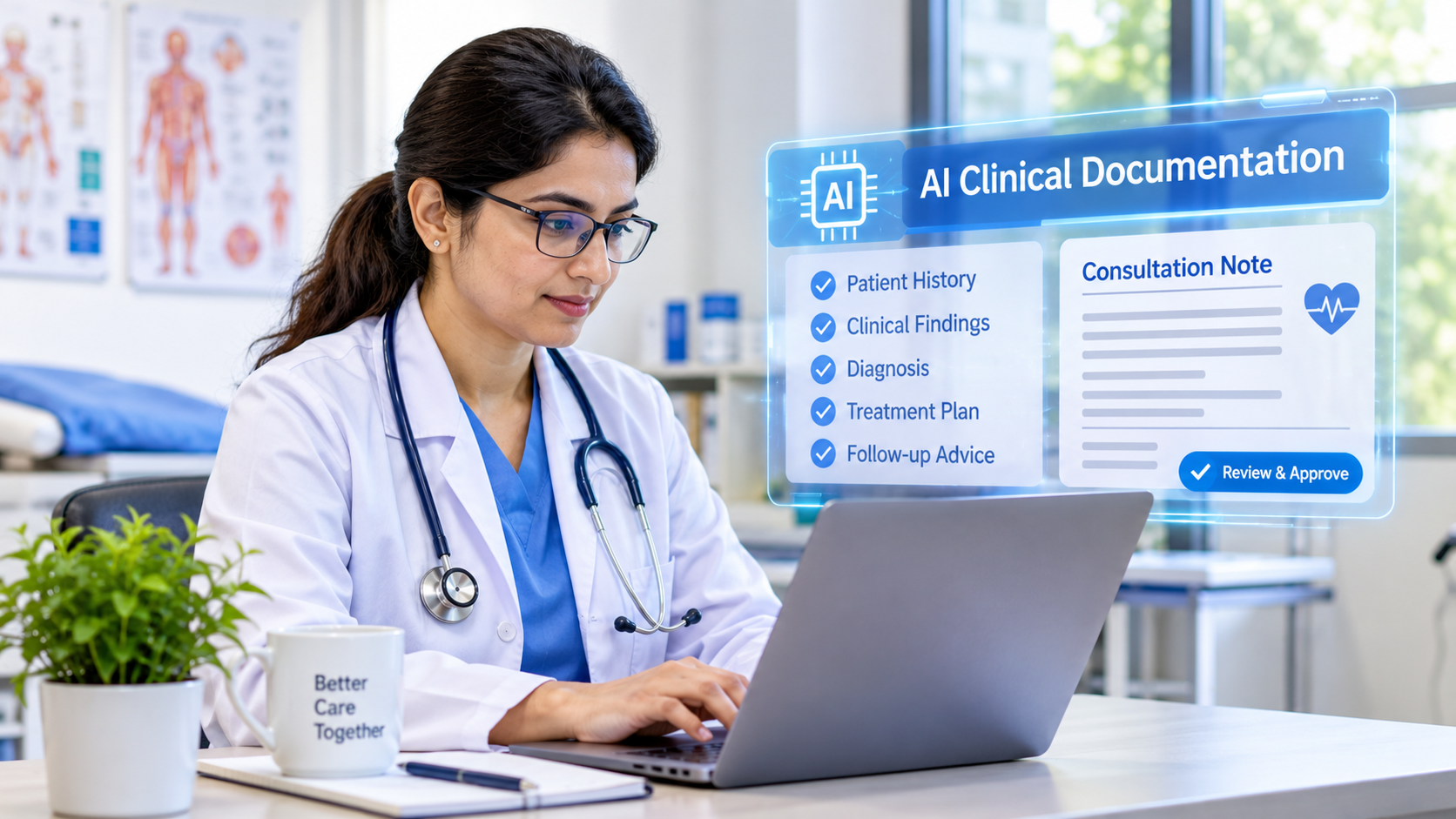
Clinical documentation is an essential part of healthcare, but preparing patient records, consultation notes, discharge summaries, and referral letters can take significant time.Artificial Intelligence (AI) is helping healthcare professionals simplify these tasks. AI-powered tools can convert consultation conversations into structured notes, summarize patient information, and assist with medical record management.When used responsibly, these tools can reduce administrative work and allow doctors to focus more on patient care.What Is AI-Powered Clinical Documentation?AI-powered clinical documentation uses technologies such as speech recognition, Natural Language Processing (NLP), and generative AI to create and organize medical records.These tools can help doctors:Prepare patient consultation notes.Summarize medical histories.Draft discharge summaries.Prepare referral letters.Organize examination findings and treatment plans.Create follow-up documentation.AI supports the documentation process but does not replace a doctor's clinical judgment.How Does AI Clinical Documentation Work?AI documentation tools generally follow three steps:1. Capturing Information: The software processes approved consultation conversations or information entered by healthcare professionals.2. Organizing Medical Details: AI identifies relevant information, such as symptoms, medical history, medications, and examination findings.3. Creating Clinical Notes: The system prepares a structured draft that the doctor can review, correct, and approve.The final medical record must always be checked by an authorized healthcare professional.Key Benefits of AI in Clinical Documentation1. Saves TimeAI can reduce repetitive typing and assist with preparing clinical notes, helping doctors manage documentation more efficiently.2. Improves Documentation OrganizationAI can arrange medical information into structured sections, making patient records easier to read and review.3. Supports Patient InteractionBy reducing manual documentation during consultations, AI may help doctors give more attention to conversations with patients.4. Simplifies Record ManagementAI can assist with summarizing lengthy patient histories and preparing drafts of medical documents.Research published in the Journal of the American Medical Informatics Association and JAMA Network Open has examined the use of AI-powered documentation tools in clinical settings.Read research on ambient AI scribesRead the JAMA Network Open studyCommon Uses in HealthcareAI-powered documentation can support different clinical workflows:OPD Notes: Prepare structured notes from patient consultations.Discharge Summaries: Organize hospital treatment details and follow-up instructions.Referral Letters: Create drafts containing relevant patient information.EHR Management: Help organize information in electronic health records.Follow-Up Records: Summarize patient progress and future care plans.Practical ExamplesExample 1: General Physician ClinicA doctor uses an AI documentation tool to prepare a consultation note based on an approved patient conversation. The doctor reviews the draft and corrects any missing details before saving it.Example 2: Hospital DischargeAI helps organize patient information into a discharge summary, including treatment details, medications, and follow-up instructions. The treating doctor verifies the final document.Example 3: Specialist ConsultationA specialist uses AI to summarize relevant information from a patient's medical history, making it easier to review previous consultations and records.These examples illustrate potential uses rather than guaranteed results.Challenges and LimitationsDespite its benefits, AI documentation has important limitations.Accuracy: AI may misunderstand medical terminology or generate incorrect information.Patient Privacy: Healthcare organizations must protect sensitive patient information.System Integration: Some tools may require integration with existing electronic health record systems.Professional Oversight: Doctors must review and approve AI-generated records.Implementation Costs: Software, training, and maintenance may involve additional expenses.Healthcare organizations should choose secure, approved solutions and follow applicable privacy and data protection requirements.Best Practices for Using AITo use AI responsibly in clinical documentation, healthcare professionals should:Review every AI-generated note before approval.Follow appropriate patient consent and privacy requirements.Use secure and trusted software platforms.Train staff to understand the technology and its limitations.Regularly monitor documentation quality and accuracy.The Future of AI in Clinical DocumentationAI technology is expected to become increasingly integrated into electronic health records and everyday clinical workflows.Future systems may offer better medical language recognition, multilingual documentation, and more efficient patient record summaries.However, successful adoption will depend on accuracy, data security, transparency, and human oversight.The World Health Organization also emphasizes responsible governance and ethical use of AI in healthcare.Read WHO guidance on AI in healthcareConclusionAI in clinical documentation offers doctors and healthcare organizations an opportunity to simplify administrative tasks, organize medical records, and improve workflow efficiency.From consultation notes to discharge summaries, AI can assist with preparing structured medical documents. However, patient privacy, clinical accuracy, and professional review must always remain priorities.AI should be treated as a supportive tool, not a replacement for medical expertise. With responsible implementation, it can help healthcare professionals spend less time on repetitive documentation and more time focusing on quality patient care.SEO DetailsSEO Title: AI in Clinical Documentation: Benefits and Uses for DoctorsMeta Description: Discover how AI in clinical documentation helps doctors save time, organize medical records, improve workflow efficiency, and maintain accuracy.URL Slug: ai-in-clinical-documentationPrimary Keyword: AI in Clinical DocumentationSecondary Keywords: AI Medical Documentation, AI Tools for Doctors, Automated Clinical Documentation, AI in Healthcare, Medical Scribing Technology, AI Clinical Notes, Electronic Health RecordsCategory: Healthcare TechnologyReferencesJournal of the American Medical Informatics Association – Ambient AI ScribesJAMA Network Open – AI Documentation ResearchWorld Health Organization – Ethics and Governance of AI for Health

2 Days Ago

All blogs